Design for healthcare

An agentic-AI based healthcare experience
for the medical professionals

The problem

Doctors feel immense pressure managing appointments, records, and billing, which adds to their stress and fatigue. When these tasks detract from patient care, the risk of errors increases, leaving doctors with feelings of guilt and frustration.

Target users

Doctors and healthcare professionals struggling with heavy patient loads, appointment management, health records, and billing.

Business viability

The global agentic AI healthcare market was valued at USD 538.5 million in 2024 and is expected to reach USD 760 million in 2025. This signals a great opportunity use the AI technologies for medical professionals.

The problem

Doctors feel immense pressure managing appointments, records, and billing, which adds to their stress and fatigue. When these tasks detract from patient care, the risk of errors increases, leaving doctors with feelings of guilt and frustration.

Target users

Doctors and healthcare professionals struggling with heavy patient loads, appointment management, health records, and billing.

Business viability

The global agentic AI healthcare market was valued at USD 538.5 million in 2024 and is expected to reach USD 760 million in 2025. This signals a great opportunity use the AI technologies for medical professionals.

Design Process

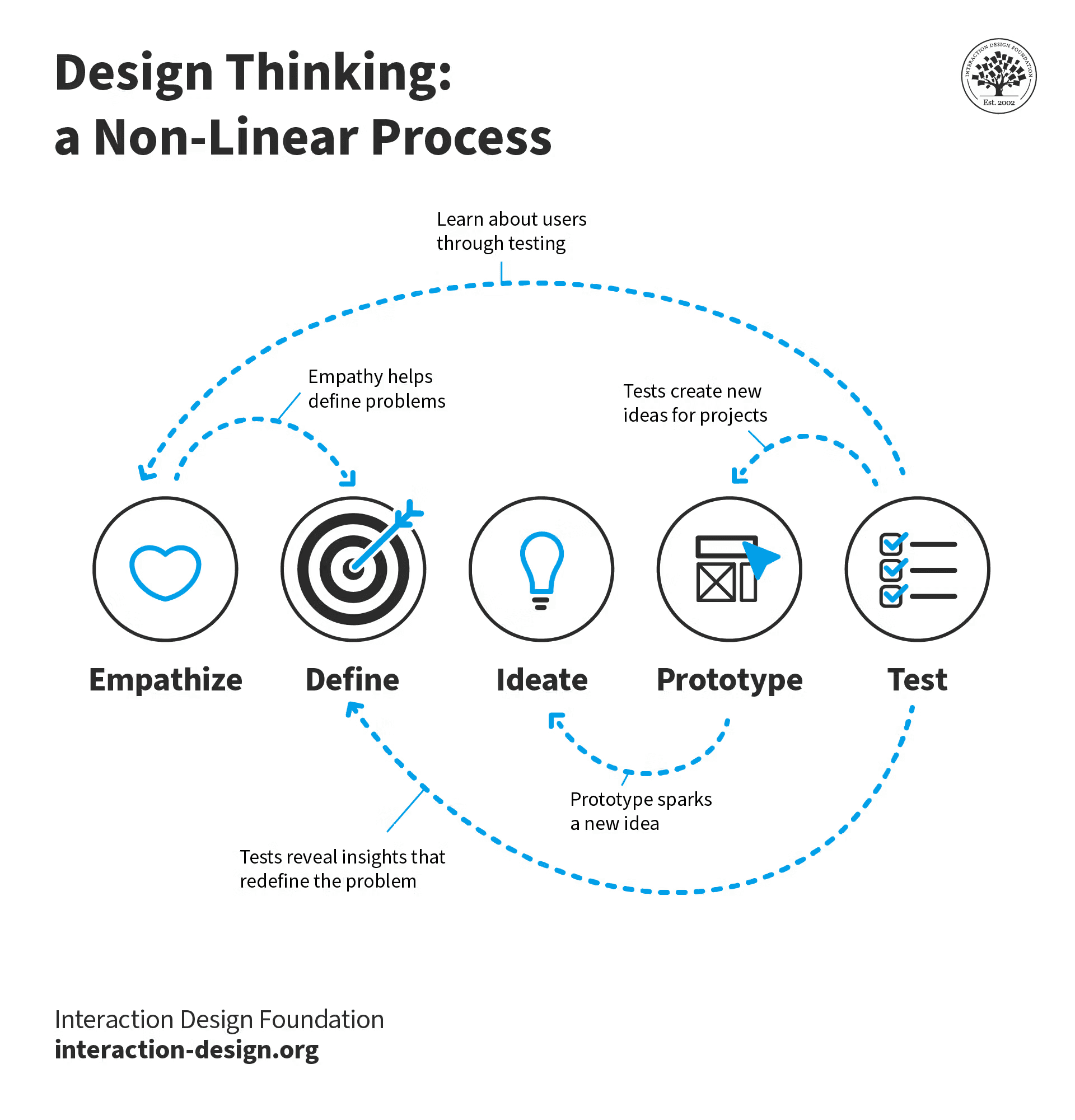
IDF Design Thinking

The five-step design thinking process is a human-centered approach to problem-solving. It involves five phases: Empathize, Define, Ideate, Prototype, and Test with users to refine the final solution.

Design philosophy

Users' need, tech endorsement and business viability.

I believe in a design that resonates with users' priorities, one that engages not only at the level of functionality but also at the level of emotion. A design endorsed by the latest technologies, one that fits within the current market dynamics and is resilient enough to withstand upcoming market shifts and triggers.

01

Empathize

Insights from real users

interviewed three doctors and found some amazing insights into the challenges they face.

Dr. Priya Singh

Insights

01

"We feel overwhelmed by paperwork, from patient records to insurance"

This administrative burden is seen as a necessity, but it consumes a significant portion of our day, leaving them with less time for meaningful interactions with their patients.

01

"Staying compliant with ever-changing regulations is a huge source of stress"

Rules, documentation are always being updated, forcing us to constantly re-learn procedures and adapt their workflows. This constant change is mentally exhausting and adds a lot of pressure.

03

"Existing software requires excessive clicks and manual data entry"

Many doctors are forced to use outdated, clunky EHR systems that are not intuitive. Instead of helping, this poor technology adds to their frustration and increases the risk of errors, making their jobs even harder.

Dr. Rohan Patel

Insights

01

"I can never truly relax, and the stress is constant"

Making life-or-death decisions while also handling a huge amount of administrative work.

02

"I'm constantly "on" : working long hours, being on call, and doing paperwork after hours"

My job makes a work-life balance feel impossible. I'm constantly "on"—working long hours, being on call, and doing paperwork after hours. There's just no time for my family or myself, and it's leading to burnout.

03

"Sometimes we feel emotionally detached"

Dealing with constant illness and loss is emotionally draining. Over time, it can lead to emotional fatigue, making us feel detached.

Dr Anika Sharma

Insights

01

"Back-to-back schedule leaves little time to properly communicate with patients"

Doctors feel rushed when explaining procedures, answering questions, or discussing follow-up care. This lack of time can lead to patient dissatisfaction, and need for additional, time-consuming follow-up calls.

02

"With no time to pause, doctors are more prone to making errors during the booking"

Rushed scheduling leads to double-bookings, misplaced appointments, and incomplete information, causing disruptions and added administrative work to correct.

03

"A jam-packed schedule makes it impossible to allocate extra time"

Because doctors are forced to handle every case within a strict time slot, the quality of care can be compromised. This leads them to rush through diagnoses and treatment plans, resulting in feelings of guilt and professional dissatisfaction.

02

Market Research

Understanding the competitors

Top Market Players

Insights from market research

Poor user interfaces that require numerous clicks

AthenaOne and Epic, top market players, are reactive medical platforms that require a significant effort to learn. This distracts doctors during patient examinations, leading to frustration and burnout. As a result, they feel a sense of guilt, believing that routine tasks have taken precedence over their main purpose of treating people.

02

Market Research

Understanding the competitors

Top Market Players

Insights from market research

Poor user interfaces that require numerous clicks

AthenaOne and Epic, top market players, are reactive medical platforms that require a significant effort to learn. This distracts doctors during patient examinations, leading to frustration and burnout. As a result, they feel a sense of guilt, believing that routine tasks have taken precedence over their main purpose of treating people.

03

The Gap

The Gap

Challenges Persist: Complexity, Cost, and Burnout

01

Steep learning curves and IT struggles

These systems are too comprehensive, which means they can be difficult to learn. For doctors and staff in smaller practices, who may not have dedicated IT support, this is a major barrier. They may feel overwhelmed and unprepared, even after initial training.

02

Technology distracting from patient care

When a doctor is struggling to navigate a complex interface, their attention is pulled away from the patient in front of them. The focus shifts from patient care to software, which can compromise the quality of the visit and make the doctor-patient interaction feel less personal and empathetic. This is a primary source of distraction and dissatisfaction for doctors.

03

Click fatigue

The interfaces of these systems are overloaded with information, which leads to "click fatigue." We have to click through so many screens just to do simple tasks. Instead of helping, it just adds to our workload and makes our jobs more frustrating.

04

User Flows

How platform will work at the backend

User Flows

How platform will work at the backend

05

Final Product

Final Product

An Agentic AI based experience

06

Usability testing

Feedback from real world users

The concept has received positive feedback from users, who have found it to be a game-changer for their practices. Users appreciate the automation features, which have simplified appointment scheduling and feedback management. The intuitive design and efficiency of the system have lifted a significant weight off their shoulders, allowing them to focus more on patient care.

Usability testing

Key Learnings

"Through this initiative, I've learned the value of design systems and how to utilize them to ensure consistency and continuity. I've also come to appreciate the importance of minimal designs, as they help avoid confusion for users and provide clarity and confidence"

Let’s collaborate.

Let’s collaborate.

Open to new roles.